
Fun Fact: I love old trains.
Not that I have a small corner of my house set up with model trains kind of love. But the kind that recognizes and appreciates how trains built this country that I love. They played such a crucial role in all aspects of life that we now know.
And I don’t think trains get enough credit for that history.
Any chance that I get to experience a new train ride, I take it. Extra credit is given when it’s an old steam train. There is just something magical about watching that work horse do its thing.
Prior to me moving to Carson City, I visited the area often. Two different occasions over the years allowed me to take my kids on the local train museum ride in town. The train itself is not legendary; it’s just a simple ride around the museum parking lot. But to my young children – it was monumental. After the short ride, we’d go inside the museum to play with all the fun exhibits.
But another railroad exists here, hidden high up in the hills above town. And for the past 8 years, I have driven my car under an old railroad bridge that spans across the highway. I say to myself every time that I really need to investigate that bridge, because if there’s anything I love more than an old train – it’s an old bridge!
I finally did it. I went researching. And what an experience I had!
The V&T Railroad had its grand debut back in 1869 as the main link between the Comstock Lode mines and the outside world. It was known as the “Queen of the Short Lines,” and these trains carried ore, freight, and passengers — everything a growing frontier town needed.
Today, through passionate volunteers and railroad conservation efforts, the railroad has two steam engines and one diesel engine in their fleet that have been delicately preserved and restored. Each passenger can experience the exquisite 19th century charm these machines had to offer.
The V&T Railroad has several events throughout the year, and lucky for me, I was able to book an excursion on the last weekend of the scheduled year for the Viriginia City trip. In this adventure, the 90-minute train ride takes you from Nevada’s capital to the heart of the Comstock era, winding through canyons and rugged mountains.
Once you step off the train in Virginia City, you have 3-1/2 hours to explore its boardwalks, shops, and saloons before a relaxing ride back.
Reservations were secured, and I awaited the day.
On a chilly, Sunday morning, I headed up to the V&T railroad depot. Upon arrival, the depot was a bustle of excitement and activity. Other fellow railroad lovers explored the grounds and purchased history books and souvenirs alike. A line stood before me at the will-call window to pick up my ticket for the day. A lovely, kind woman, clothed in era attire, found my ticket and handed it to me with a wish to have a fun day. And boy, would I!
As I lined up for boarding, the conductor came to greet us. After a brief wait while passengers with accommodations were loaded first, everyone walked up the stairway and found our seats. Each cushion was original. They swiveled from back to front, awarding a group of 4 to face each other and chit chat. The luggage area overhead held suitcases and hat boxes. Fancy lights and curtains adorned the cabins. Truly quite a spectacle to see!
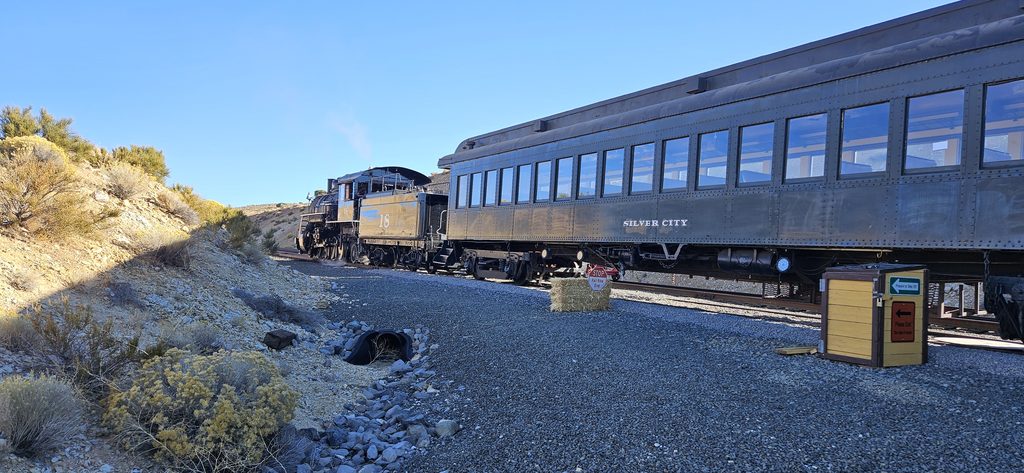
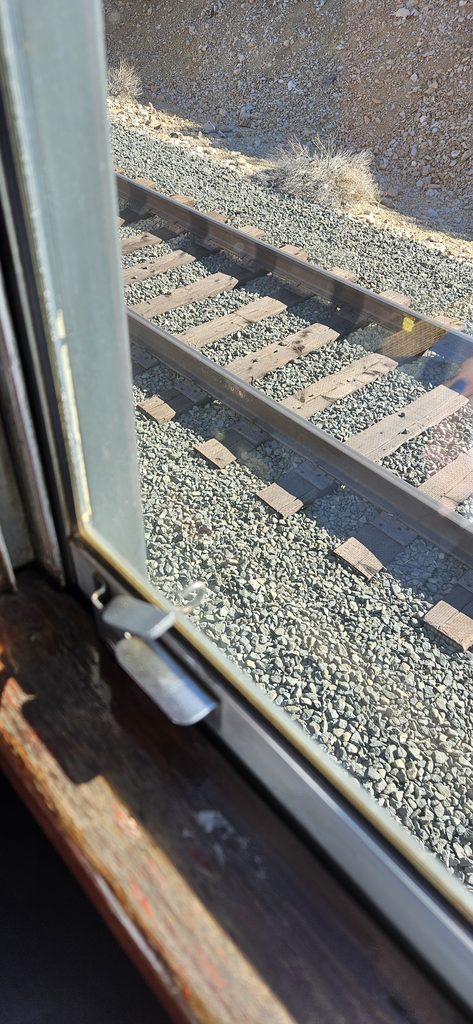
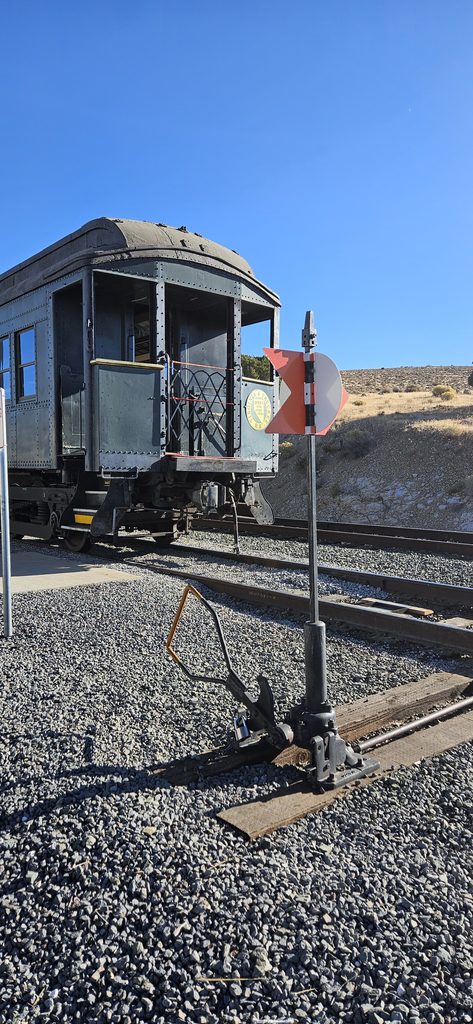
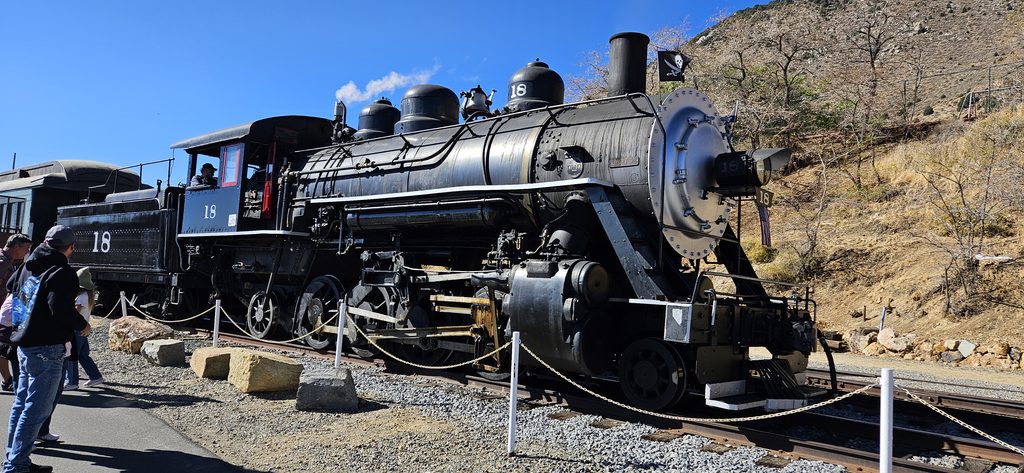
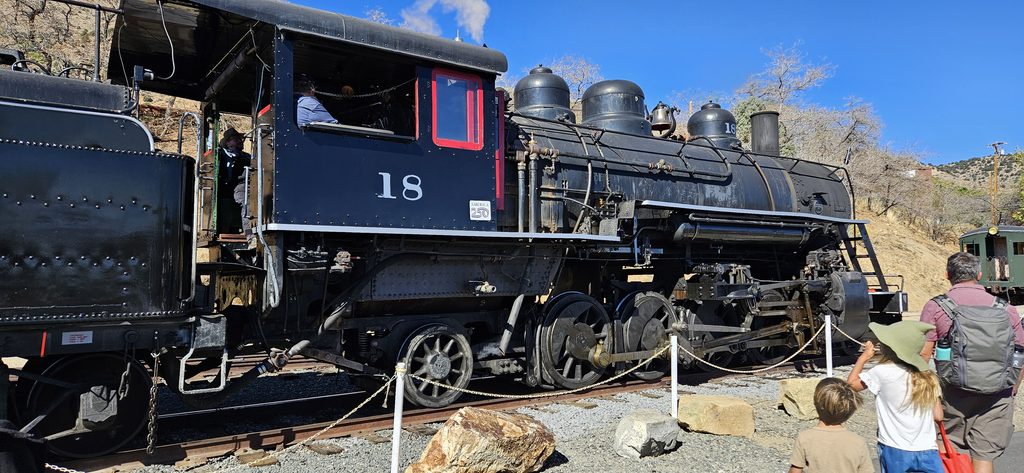
The conductor, voice booming over an installed PA system, introduced himself and thanked us for bringing a bit of history back into our modern lives. And with that, we set off for the hills of Virginia City. Along the way, he told us stories and history of what made Viriginia City the sprawling town it was all those years ago. The stories were enchanting, heartfelt and humorous. He did a wonderful job connecting the personalities and livelihoods from all those years ago to our common lives now.
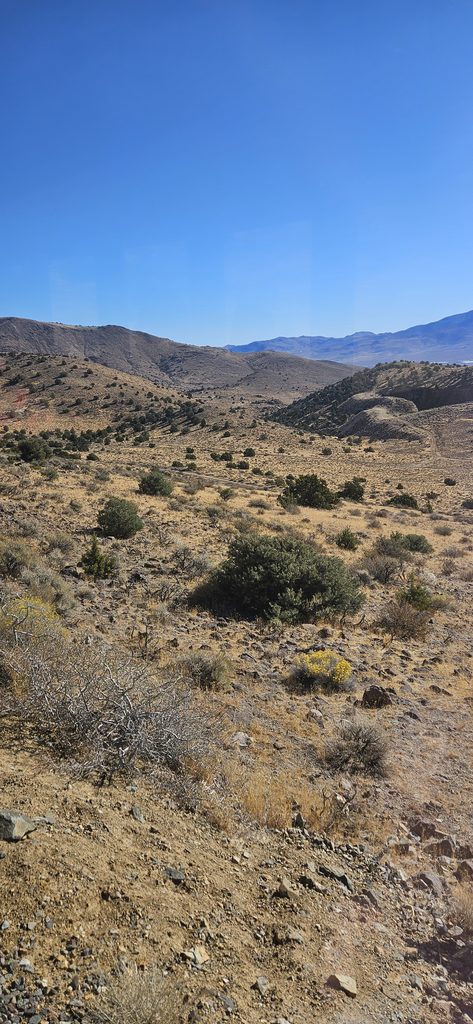
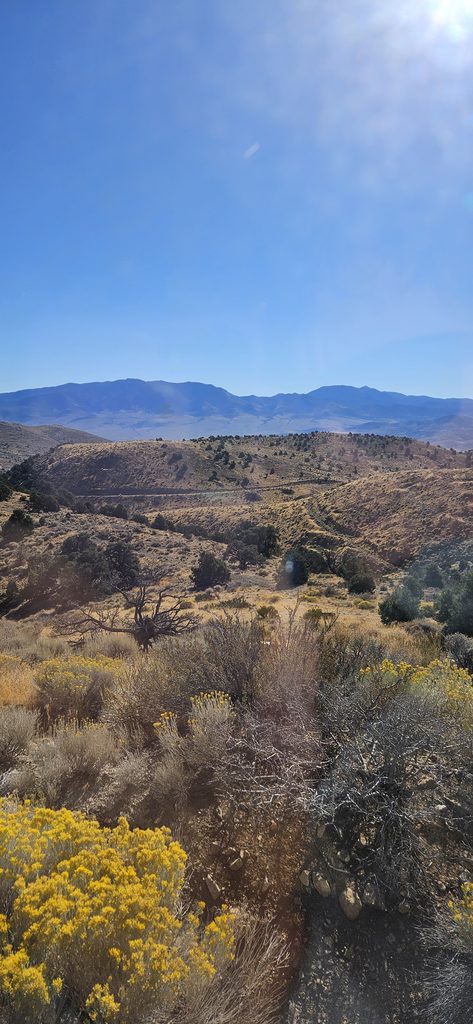
As the train wound its way through the foothills, a gorgeous view of the land is seen from all the windows. This baren landscape has its own natural beauty that can only be experienced from seeing it firsthand. The desert has abundant allure, if only you dare to see it.
Arriving in Virginia City, the depot was full! A pumpkin patch train was boarding, and the excitement on the children’s faces was unmatched. The were headed down to Gold Hill on an old locomotive to pick their very own pumpkin. Halloween was approaching, and this type of adventure was exactly what they had hoped for!
Leaving the depot, an uphill trek awaited us to main street. A free shuttle does pick you up and drop you off at the depot, but I decided to exert myself and walk the two blocks. Virginia City is built on rugged landscape, and you likely can’t go anywhere in town without first climbing uphill. This is part of the charm.
Due to the proximity of lunch time, my first stop was to a delicious BBQ joint at the end of town. I enjoyed some delicious brisket and watched as passer-by’s jumped at their Halloween animatronics. Virginia City is a fantastic place to people watch. The local mascot, Pepper Murphy the pig, greeted visitors across the street, and gun-slinging cowboys strolled the wooden board walk.
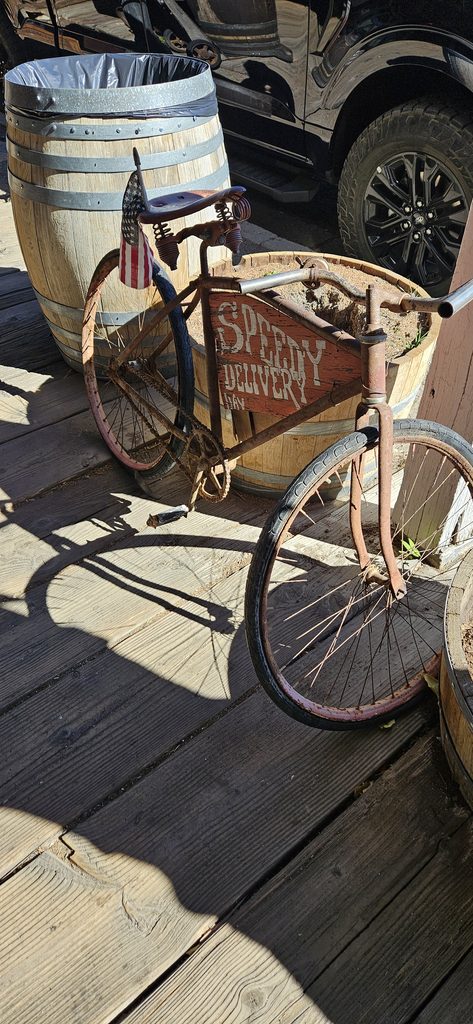
I find that Virigina City is best for me starting at one end of town, visiting each store along the way, before crossing main street and coming back down the opposite side. The stores are all different and unique, you truly will never know what you’ll find. From western wear to jewelry and lots of antiques, there is something for everyone. Old fashioned candy stores, bars and exhibits adorn the old wooden walkways. Delicious smells fill the air, butterscotch discs and root beer barrels are handed out to the visitors, and every person has a smile on their face. Of course, there are a plethora of museums and mine tours to choose from as well. You can easily fill a day with all the sights and sounds of town.
As I made my way through the stores and tucked my unique treasures away in my bag, it was inevitably time for the return trip home. The afternoon sun warmed the train cars nicely, and the old windows were opened to let in some of those Zephyr Winds we had learned about on the trek up hill. Everyone was worn out from a long day of tourism, and the trip was peaceful and relaxing.
Although I’ve visited Virginia City several times over the years, the history and charm never fails to amaze me. Thinking of how all those settlers lived their lives, how rich the land made them all, and the memories that those walls hold. It’s captivating. This experience was no different. From receiving the tickets, to boarding the restored locomotive, enjoying a fun day in Virginia City, and then the return trip home – this was an adventure worth its weight in gold (or should I say silver).
Being a visitor to Virginia City is something I encourage everyone to experience at least once in their lifetime. The charm and history completely overtake your senses, and seeing the world through their eyes provides you with a connection to these settlers from so many years ago.
Aboard a lovingly preserved train, history isn’t just told — it’s felt, becoming part of your own memories. Listen to tales of the Old West and the railroad’s most prominent figures, spanning back 150+ years.
It’s an adventure you truly MUST encounter.
Exert from https://visitvirginiacitynv.com/history/
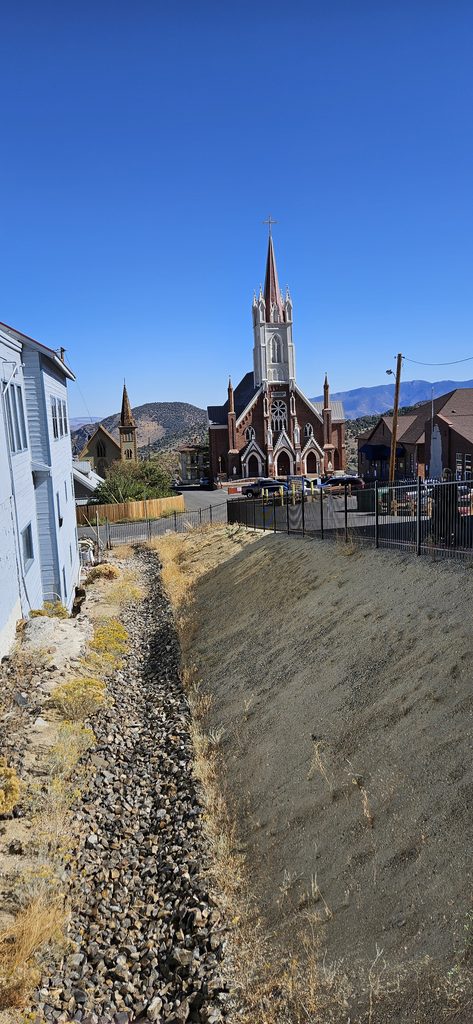
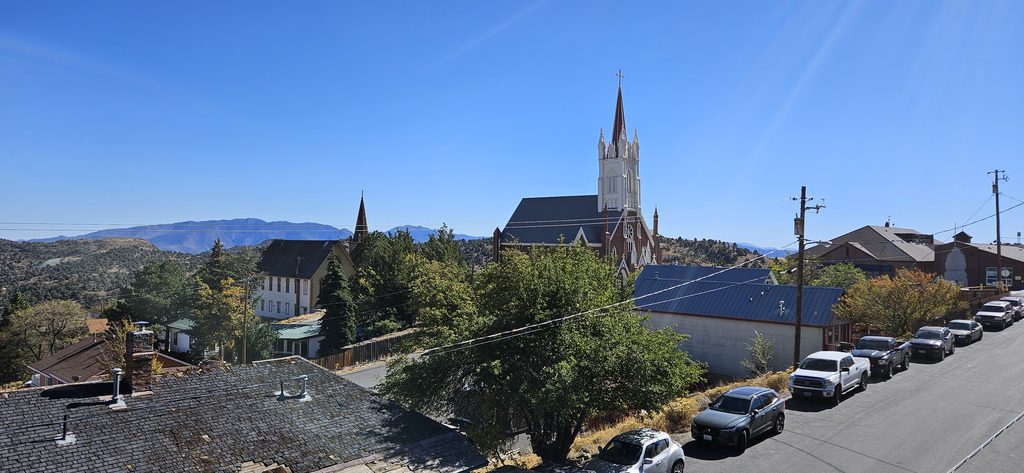
The history and stories of Virginia City are as unique, rich and colorful as the streets and buildings themselves. One must see Virginia City to even remotely understand it. It’s a living, breathing example of America’s fortitude and desire to achieve.
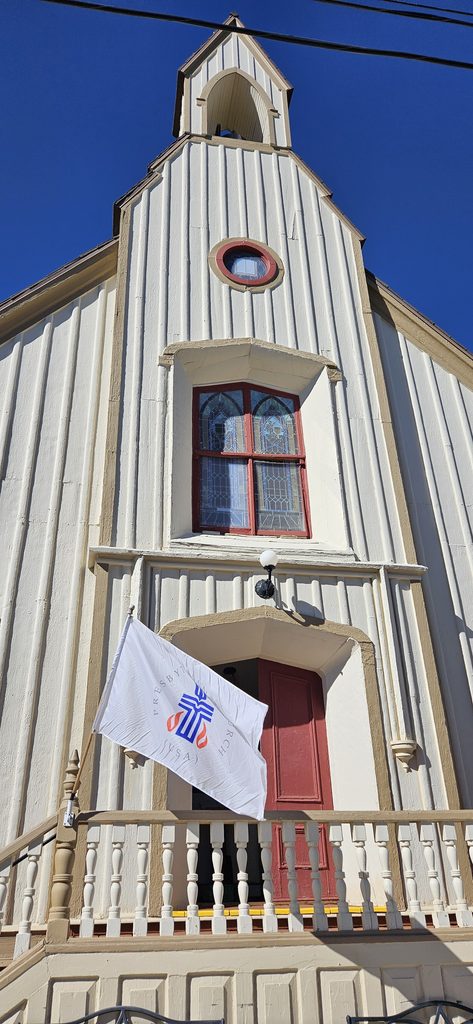
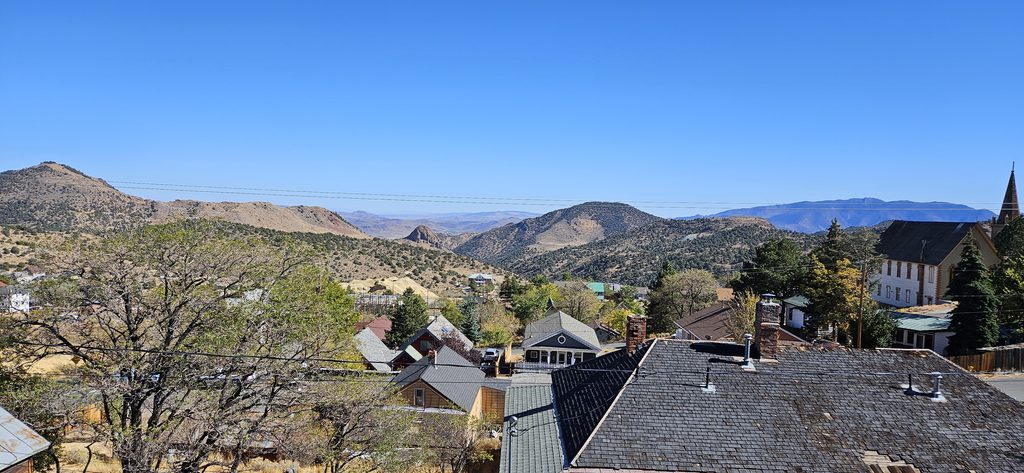
At its peak, Virginia City was a thriving, vibrant metropolis of 25,000 residents. Located about 35 miles southeast of Reno, Nevada in the Virginia Range and in the shadow of Mount Davidson, its hills made millionaires. Silver and gold were buried deep beneath her streets and men and women traveled from around the world to live and work. Miners pulled millions of dollars from shafts and tunnels 3,000 feet beneath the thriving town. The spirit of those Comstock “originals” still inhabits the places where they once worked, lived, worshiped, educated and died.
The 19th-century mining bonanza that turned Virginia City into the most important industrial city between Denver and San Francisco, was the result of the Comstock Lode. A rich deposit of silver ore discovered by Henry Comstock, part-owner of the property on which it was discovered, in June 1859. Getting his nickname for only making pancakes for breakfast, Henry T. “Pancake” Comstock was referred to as one of the original finders of gold in Gold Canyon, just south of Virginia City. Comstock was said to have been lazy, employing American Indians on his claims, and was a fast talker. Since he was on the scene of the original findings, his name stuck almost instantly.
The destitute prospectors from all over the world funneled their millions back into the town by building mansions, hospitals, churches, opera houses and schools. They imported furniture, fashions and entertainment from Europe and the Orient.
The riches helped finance the U.S. government during the Civil War, as attested by a museum named after General Ulysses Grant. In fact, silver from Virginia City may have helped save the Union. It also helped build empires around the world. Among the finest examples is San Francisco, a city built with Comstock silver.
The Ophir, Gould, Curry and Consolidated Virginia mines — those consisting of the “Big Bonanza” of 1873 — produced at least $300 million in mineral deposits and made telecommunications giant John Mackay a virtual overnight millionaire. The Comstock King spent millions of those proceeds on Nevada’s School of Mines located on the University of Nevada, Reno campus where his namesake adorns many of the buildings on campus including a statue on the quad. In addition to Mackay, Fair, Flood and O’Brien comprised the remaining “Bonanza Kings.” Other notable icons of the Comstock included engineer Adolph Sutro, who later became Mayor of San Francisco, banker William Sharon, entrepreneur George Hearst and the famous Madame Julia Bulette.
While the Virginia & Truckee Railroad transported bullion from the rural highlands of Virginia City to Carson City, the Territorial Enterprise, with literary whiz Mark Twain, delivered news of the day to the vibrant mining metropolis of 25,000. In 1868, Mark Twain reminisced and wrote about his journalism career in Nevada with the Virginia City Territorial Enterprise:
“To find a petrified man, or break a stranger’s leg, or cave an imaginary mine, or discover some dead Indians in a Gold Hill tunnel, or massacre a family at Dutch Nick’s, were feats and calamities that we never hesitated about devising when the public needed matters of thrilling interest for breakfast. The seemingly tranquil ENTERPRISE office was a ghastly factory of slaughter, mutilation and general destruction in those days.”
— Mark Twain’s Letters from Washington, Number IX, Territorial Enterprise, March 7, 1868
Mining was a hard way to make a living. With 100-degree temperatures 3,000 feet down a mine shaft, it required deep concentration from the person at the helm of the elevator. The people worked hard and played hard. Away from work, the people of the Comstock enjoyed performances at Piper’s Opera House, which still stands today as a favorite for events and weddings. Residents also played baseball as a favorite pastime and unwound after a long day at Virginia City’s many saloons that topped more than 100 at one point.
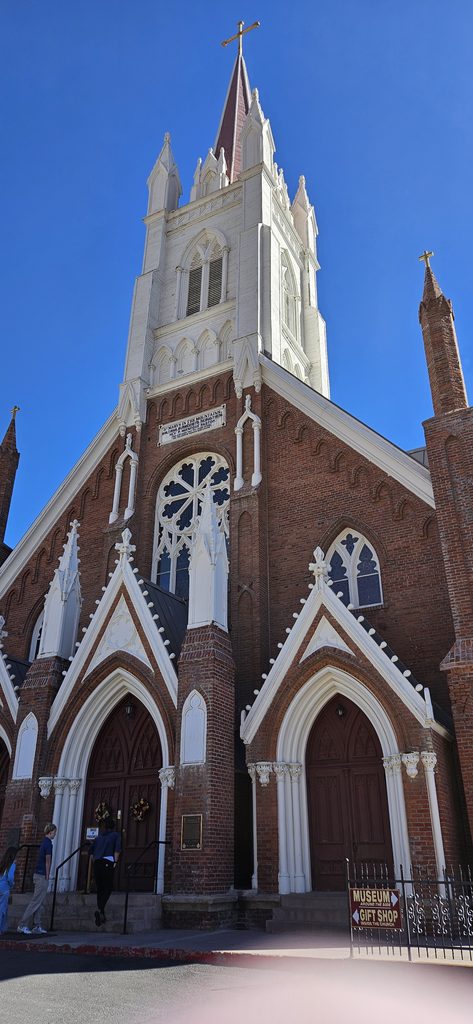
Many attended school with the Fourth Ward School still standing as a testament to the grammar and high school students it educated. The school is considered a must stop for visitors to learn about the town’s vibrant history. Virginia City Comstockers are buried in the cemetery with stories told to this day and tombstone messages reflecting their unconventional lives.
The Great Fire of 1875
“A breath of hell melted the main portion of the town to ruins.”
Territorial Enterprise, 1875
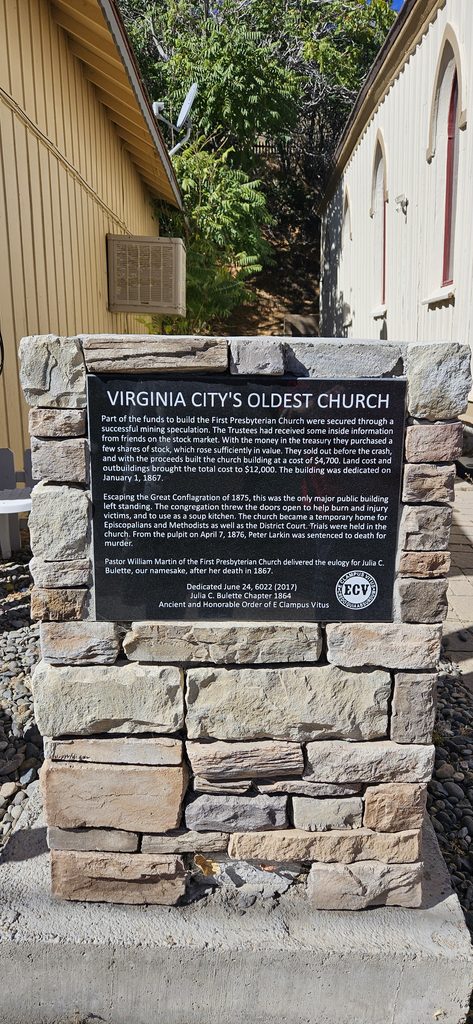
The morning of October 26, 1875 would dramatically change Virginia City in more ways than one. A gripping fire, started at the boardinghouse of “Crazy Kate,” and roared through town fueled by the dry timbers and Zephyr winds. Panic set in quickly, buildings caught ablaze and mines filled with fire and smoke. Almost instantly, 8,000 people were homeless. The total loss for the city was estimated at $10 million. Luckily, the casualties from the fire were remarkably low. Restoring the town started immediately and in less than a year most everything was rebuilt. Even the International Hotel was reconstructed, which had six stories, and hosted the first elevator in Nevada.
Today, visitors to Virginia City can walk with these past residents. Pack your passion and imagination for this authentic step back in time.